How to Reverse Bay Park on your Driving Test
A step-by-step method to help you reverse into a parking bay safely, accurately, and with confidence during your driving test.
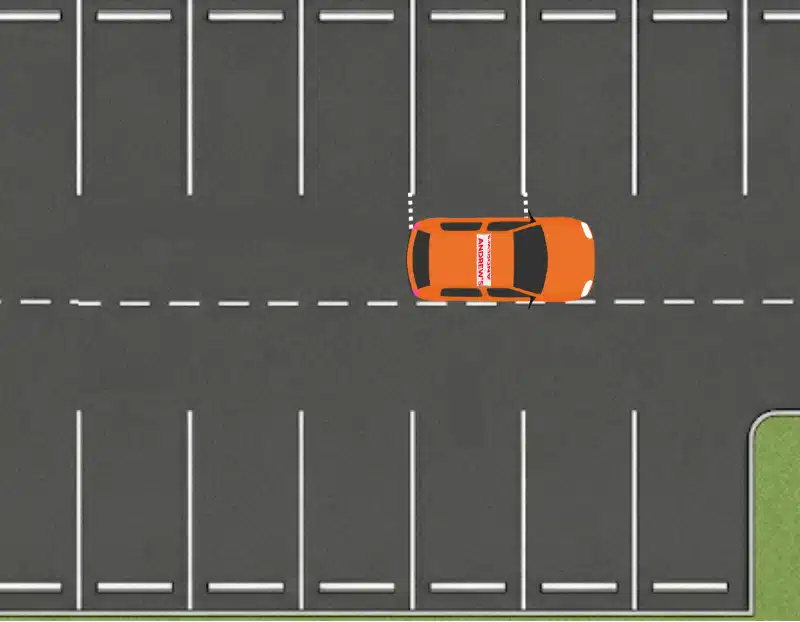
Step 1: Get Into Position
Pull up slightly to the right-hand side of the lane as much as is safe. This gives you more room to swing the car into the bay.
Line the rear of your car up with the dotted line of the parking bay you want to reverse into.
Before moving, check all around the vehicle, including mirrors and blind spots.
Step 2: Full Lock Left
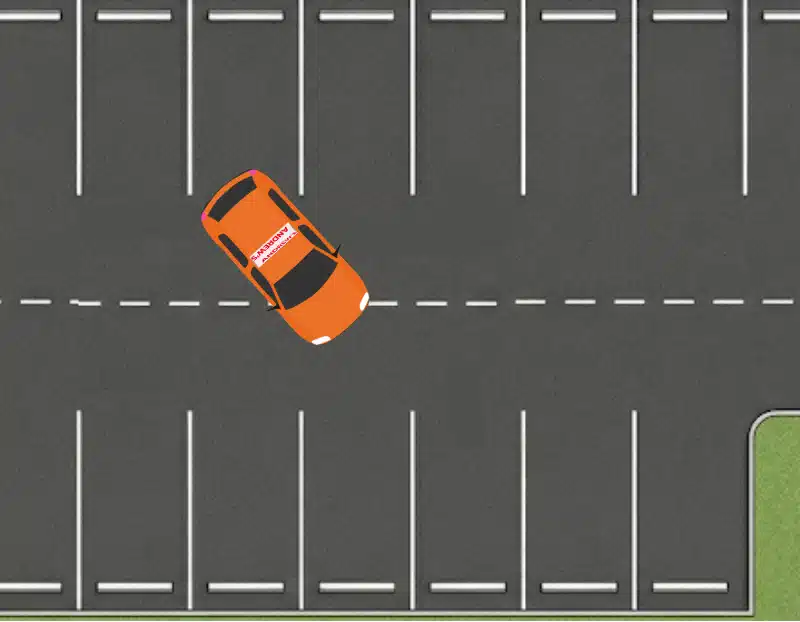
Once it is safe, begin reversing slowly.
As soon as the car starts moving, apply full lock to the left.
Continue reversing slowly as the rear of the car moves into the bay.
Step 3: Watch the Bay Lines
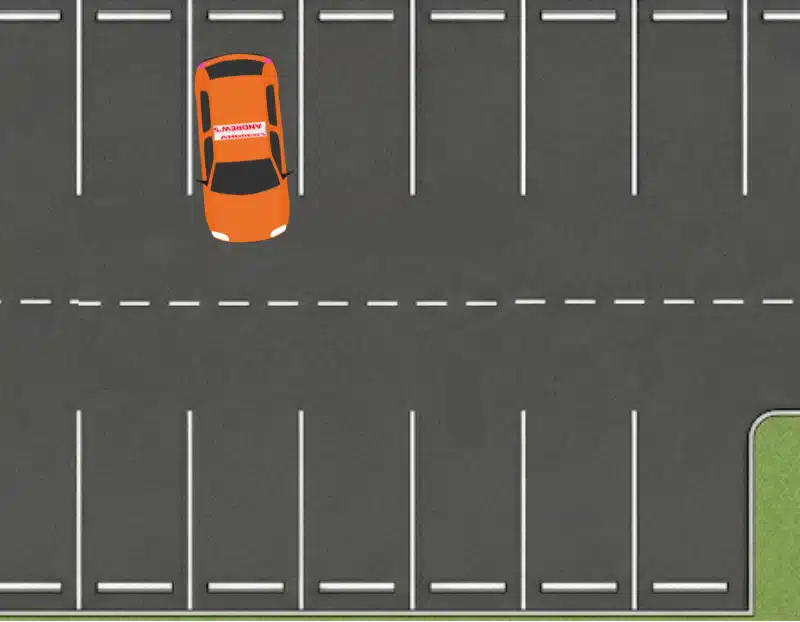
Use both door mirrors to check that the car is entering the bay evenly.
Keep reversing until the car is almost straight inside the bay.
If needed, pause and make small adjustments.
Step 4: Straighten and Finish
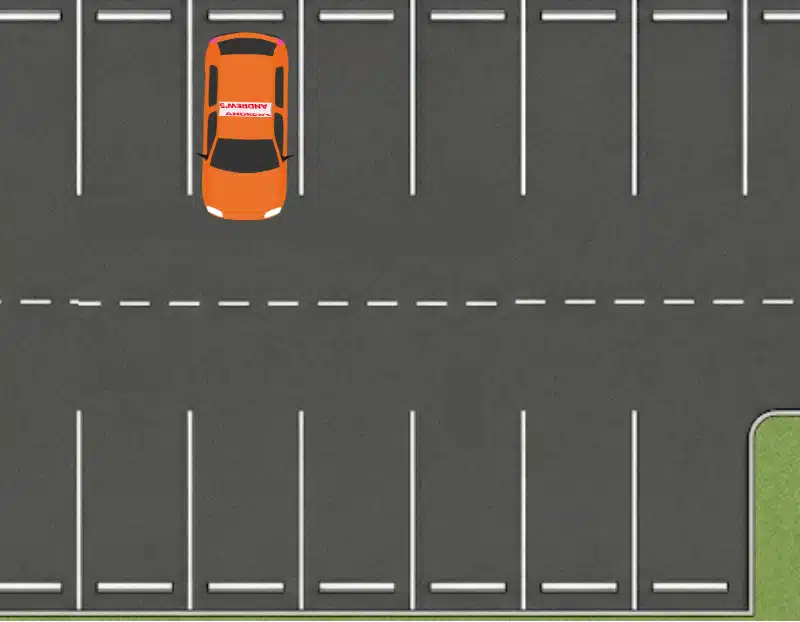
Straighten the steering wheel once the car is lined up with the bay.
Continue reversing slowly until the vehicle is fully inside the space.
Make sure the car is centered between both white lines and fully within the bay.
Helpful Tip
Reverse slowly and keep checking both mirrors throughout the manoeuvre. safety and accuracy are more important than speed. If you miss the bay or are too far to one side, it's fine to shunt forward to rectify.
Recommended Parking Aids
A few handy products that can help you practise your parking and build confidence before your driving test.
Blind Spot Mirror
Helps improve visibility when reversing and judging distance from the kerb.
View on AmazonLearner Driver Interior Mirror
Useful for practice sessions with family or supervising drivers.
View on AmazonParking Sensor Kit
Great for helping judge distance while learning to reverse park safely.
View on AmazonBay Parking FAQs
You should aim to finish neatly between the white lines with the whole car fully inside the bay.
The examiner is looking for good positioning and control rather than absolute perfection. As long as you are safely within the lines and reasonably central, this is normally acceptable.
Yes, absolutely.
You are allowed to pull forward and correct your position as long as you do it safely and continue making effective observations.
Touching the line is not automatically a fail.
However, if any part of the car finishes over the line or outside the bay, it may result in a driving fault and could be marked more seriously depending on how far out you are.
Yes, the examiner may ask you to either drive forward into a bay and reverse out or reverse into a bay.
Reverse bay parking is one of the common manoeuvres used on the practical driving test.
Only if it will help other road users.
In most car parks, good observations are more important than signalling. Always check all around the vehicle before reversing.
Examiners are looking for:
- good all-round observations
- slow controlled movement
- accurate positioning within the bay
- safe adjustments if needed
It does not need to be perfect, just safe and controlled.
Need Help Practising?
Book Your Lesson🎓 Driving Skills Recaps
Professional guides to help you master your practical driving skills.
Discover more learner driver guides, driving test tips, manoeuvres, and lesson recaps to help you build confidence and pass your test. Visit the Learner Hub