Parallel Parking Made Simple
A step-by-step method to help you reverse into a space safely, accurately, and with confidence during your driving test.
Step 1: Start the Parallel Parking Manoeuvre
Examiner Instruction “You will be asked to pull up on the left before the yellow car. Make sure you leave enough room ahead so you can move past the yellow car and position your vehicle straight and parallel alongside the target car.”
Pull up on the left and stop a little way before the parked car you will be reversing behind. Leave enough room to move forward and position your car straight and parallel alongside it.
Before moving off, check your mirrors and blind spot carefully.
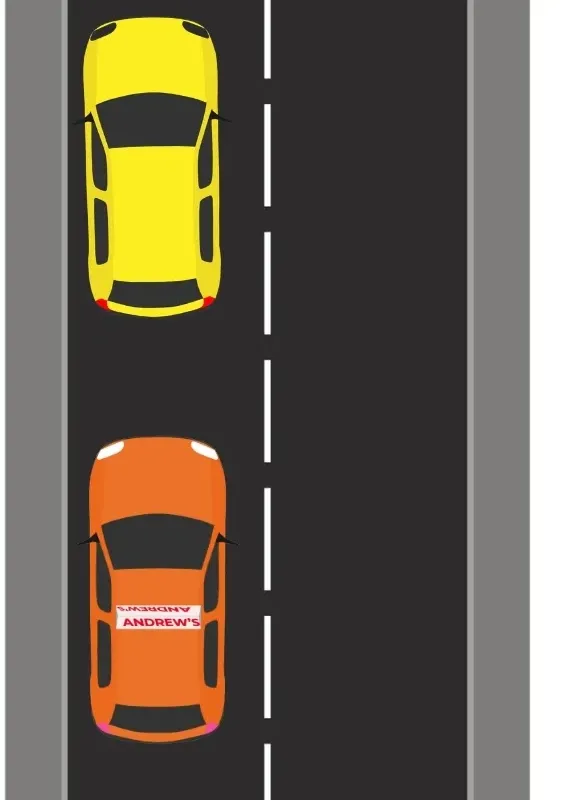
Examiner Instruction “You will then be asked to reverse into the space behind the yellow car, finishing reasonably close to the kerb. Allow yourself about two car lengths.”
Step 2: Pull Up Alongside the Parked Car
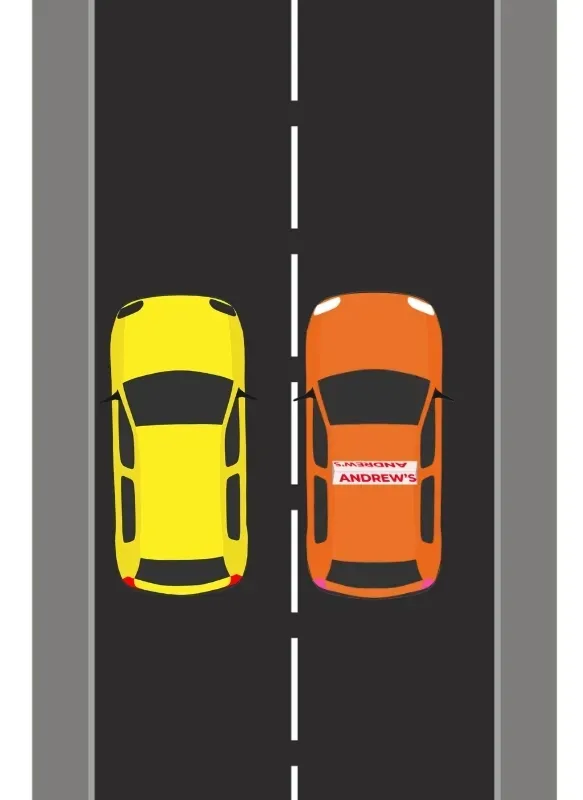
Stop next to the parked car with your wheels facing straight ahead. Leave about a 1 metre gap between the cars.
Try to line up your rear wheels roughly level with the rear wheels of the parked car. This gives you the correct starting position for the manoeuvre.
Step 3: Select Reverse and Begin Moving Back
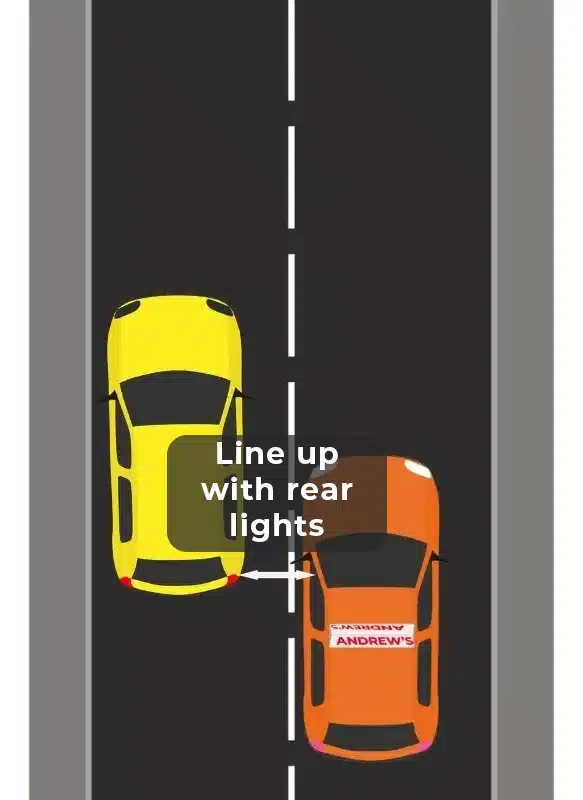
Carry out full observations all around the vehicle. When safe, begin reversing slowly.
Continue until the rear lights of the parked car line up with your passenger-side window. This is your turning point.
Step 4: Turn One Full Turn to the Left
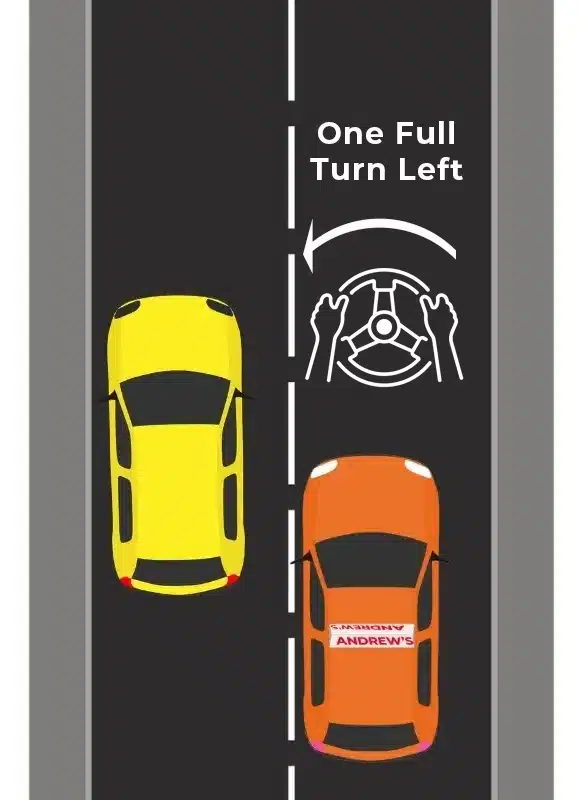
Turn the steering wheel one full turn to the left.
Continue reversing slowly until your car reaches roughly a 45-degree angle to the kerb.
What does 45° look like?
A 45° angle means your car should be about halfway between straight and fully parked. The rear of the car will be moving towards the kerb, while the front still points slightly out into the road.
Think of it as the halfway point before you straighten the wheels.
Step 5: Straighten the Wheels
Turn the wheel one full turn to the right to straighten your wheels.
Continue reversing until your rear wheel is about 8 inches from the kerb. A blind spot mirror, like the ones we use on our driving lessons, can help you judge this distance.
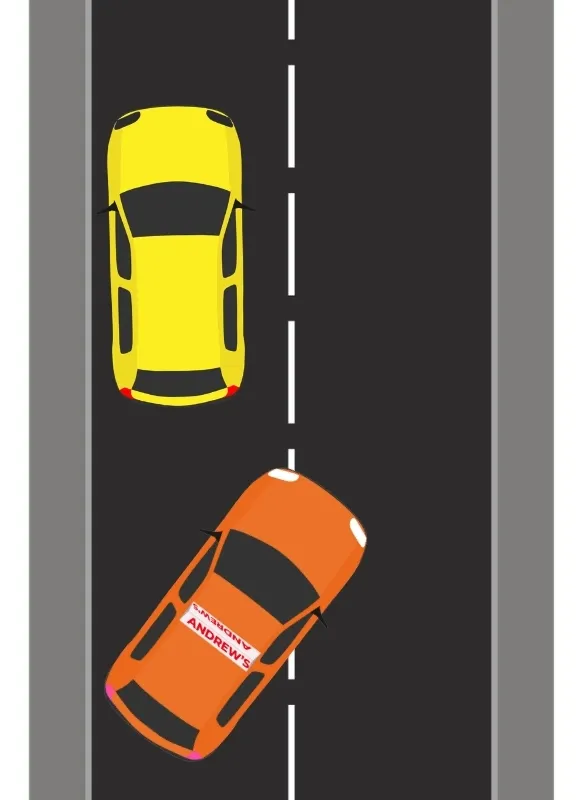
Step 6: Full Lock Right and Finish the Parallel Park
Check that the front of your car will clear the parked vehicle ahead, then turn the wheel fully to the right.
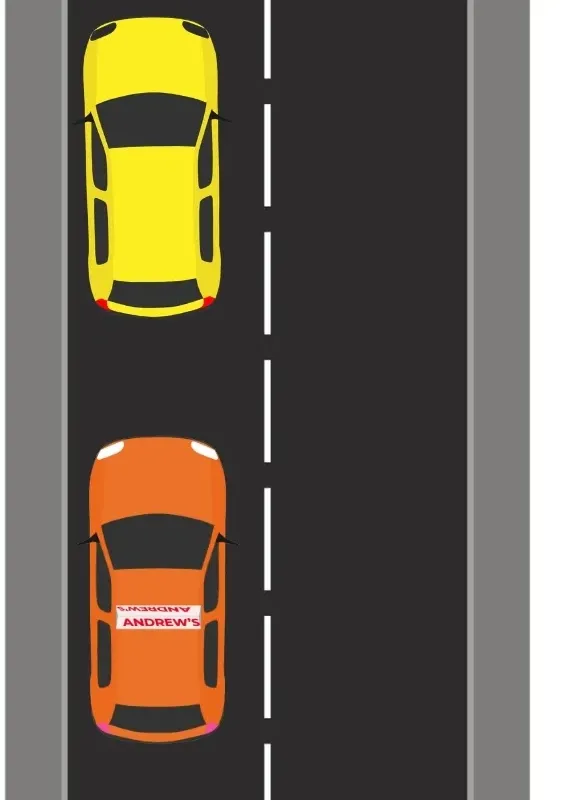
Keep reversing until you are parallel with the kerb, reasonably close to it, and in line with the car in front.
Aim to finish within around 30cm, roughly the width of a roadside drain.
Helpful Tip
Keep the car moving slowly and continue making observations throughout the manoeuvre.
Recommended Parallel Parking Aids
A few handy products that can help you practise your parking and build confidence before your driving test.
Blind Spot Mirror
Helps improve visibility when reversing and judging distance from the kerb.
View on AmazonLearner Driver Interior Mirror
Useful for practice sessions with family or supervising drivers.
View on AmazonParking Sensor Kit
Great for helping judge distance while learning to reverse park safely.
View on AmazonParallel Parking FAQs
You should aim to finish within about 30cm (roughly 12 inches) of the kerb, which is about the width of a roadside drain. This is generally considered reasonably close on your driving test.
The examiner is looking for safe positioning and good control rather than absolute perfection. Too close may risk touching the kerb, while leaving a large gap could result in a driving fault.
No, you will usually be asked to reverse behind one parked vehicle, not between two cars.
You’ll be given enough space to complete the manoeuvre safely, typically at least two car lengths. However, there may be other parked cars nearby, so it’s important to show good control, accuracy, and awareness throughout.
Lightly touching the kerb may result in a minor fault, but mounting the kerb or hitting it heavily can lead to a serious fault.
Yes. You are allowed to make adjustments as long as you stay in control of the vehicle and continue to check your surroundings.
No, for the parallel park manoeuvre you will be asked to pull up and park on the left-hand side of the road.
Parking on the right is a separate manoeuvre, where you pull up on the right, reverse a short distance, and then rejoin traffic safely.
You should signal if it will benefit other road users. Always check your mirrors and blind spot before moving.
Examiners are looking for good control, effective observations, and reasonable accuracy. It doesn’t have to be perfect, just safe and controlled.
Need Help Practising?
Book Your Lesson🎓 Driving Skills Recaps
Professional guides to help you master your practical driving skills.
Discover more learner driver guides, driving test tips, manoeuvres, and lesson recaps to help you build confidence and pass your test. Visit the Learner Hub